

Betül URALCAN
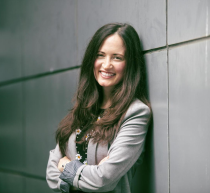
Doç. Dr.
E-posta:
Adres:
Department of Chemical Engineering, Boğaziçi University, Bebek 34342, Istanbul-TURKEY
Telefon:
+90(212)359-6871
Öğrenim:
Doktora: Kimya ve Biyoloji Mühendisliği, Princeton Üniversitesi, USA, 2019
Graduate Certificate in Comp. and Inform. Science, 2015-2019
Teaching Transcript Program 2014-2019
Yüksek Lisans: Kimya ve Biyoloji Mühendisliği, Princeton Üniversitesi, USA, 2015
Lisans: Kimya Mühendisliği, Boğaziçi Üniversitesi, İstanbul, Türkiye, 2013
Deneyim:
Doçent: Kimya Mühendisliği, Boğaziçi Üniversitesi, Türkiye, 2024-
Doktora sonrası araştırmacı: Kimya ve Çevre Mühendisliği, ABD, 2023-2024
Doktor öğretim üyesi: Kimya Mühendisliği, Boğaziçi Üniversitesi, Türkiye, 2019-2023
Araştırma görevlisi: Kimya ve Biyoloji Mühendisliği, Princeton Üniversitesi, NJ, USA. 2014-2019
Taltif ve Ödüller:
- Bilim Akademisi Genç Bilim İnsanı Ödülü, Türkiye 2024Anderson Doktora Sonrası Araştırma Bursu, Yale Üniversitesi, New Haven, CT, USA, 2023-2024
- TÜBİTAK 2232 Uluslararası Lider Araştırmacılar Programı, Türkiye, 2019.
- Young Investigator Award at Gordon Conference on Liquids, NH, USA, 2017.
- Birincilik ödülü - Poster Prize at Faraday Discussions on Ionic Liquids, Cambridge, UK, 2017.
- Prof. Dr. Turgut Noyan Akademik Başarı Ödülü, Boğaziçi Üniversitesi, Türkiye, 2013.
Araştırma Alanları:
- Desalinasyon ve membran teknolojileri
- Çift katmanlı kapasitörlerde enerji depolama mekanizmaları ve cihaz optimizasyonu.
- Proteinlerin katlanma/açılma mekanizmaları ve termodinamiği.
- Donma sıcaklığının altındaki suyun termodinamik özellikleri.
- Kiral sistemlerin faz özellikleri.
Seçilmiş Yayınlar:
- A.H. Dogan, A.S. Korkut, A. Haji-Akbari, B. Uralcan, Computational Investigations of Ion Selectivity in Capacitive Deionization from Electronic to Device Scales, The Journal of Physical Chemistry Letters 16, 12453-12469, 2025.
- W. Pan, D. Roy, B. Uralcan, S. K. Patel, A. Iddya, E. Ahn, A. Haji-Akbari, J. Kamcev, and M. Elimelech, A Highly Selective and Energy Efficient Approach to Boron Removal Overcomes the Achilles Heel of Seawater Desalination, Nature Water, 3, 99-109, 2025.
- D. Koroglu, H. Bingol, B. Uralcan*, Enhanced Flexible Supercapacitors with Boron-Doped Graphene Electrodes and Carbon Quantum Dot Gel Electrolytes, Royal Society of Chemistry Advances, 15(7), 5011-5019, 2025.
- D. Koroglu, H. Bingol, B. Uralcan*, Flexible solid-state supercapacitors based on biowaste-derived activated carbon and nanomaterials for enhanced performance, Nanotechnology, 36, 105402, 2025.
- C. Violet, M. Heiranian, L. F. Villalobos, A. Ball, B. Uralcan, H. Kulik, A. Haji-Akbari, M. Elimelech, Designing membranes with specific binding sites for selective ion separations, Nature Water, 2, 706-718, 2024.
- Kachirani, B. Uralcan, A. Haji-Akbari, Effect of Pressure on the Conformational Landscape of Human γ D-Crystallin from Replica Exchange Molecular Dynamics Simulations, Journal of Physical Chemistry B, 128, 4931-4942, 2024.
- D. Kaya, D. Koroglu, E. Aydın, B. Uralcan*, Optimization of Capacitance in Supercapacitors by Constructing an Experimentally Validated Hybrid Artificial Neural Networks-Genetic Algorithm Framework, Journal of Power Sources, 568, 232987, 2023.
- S. Korkut, B. Uralcan*, RGO/Ionic Liquid Composites with Tunable Interlayer Spacing for Improved Charge/Discharge Kinetics in Supercapacitors, Nanotechnology, 34(23), 235402, 2023.
- T. Longo, N. Shumovskyi, B. Uralcan, S. V. Buldyrev, M. A. Anisimov, P. G. Debenedetti, Formation of Dissipative Structures in Mixtures with Molecular Interconversion, Proceedings of the National Academy of Sciences, 120(1), e2215012120, 2022.
- Uralcan*, I. Uralcan, Origin of Enhanced Performance in Nanoporous Electrical Double Layer Capacitors: Insights on Micropore Structure and Electrolyte Composition from Molecular Simulations, ACS Applied Materials and Interfaces, 14(14), 16800, 2022.
- E. Can, B. Uralcan, R. Yildirim, Enhancing Charge Transfer in Photocatalytic Hydrogen Production over Dye-Sensitized Pt/TiO2 by Ionic Liquid Coating, ACS Applied Energy Materials, 4(10), 10931, 2021.
- Uralcan, T. J. Longo, M. A. Anisimov, F. H. Stillinger, P. G. Debenedetti, Interconversion-controlled Liquid–Liquid Phase Separation in a Molecular Chiral Model, Journal of Chemical Physics, 155(20), 204502, 2021.
- E. Markwalter, B. Uralcan, I. Pelczer, S. Zarzhitsky, M. H. Hecht, P. G. Debenedetti, Stability of Protein Structure during Nanocarrier Encapsulation: Insights on Solvent Effects from Simulations and Spectroscopic Analysis, ACS Nano, 14(12), 16962, 2020.
- Uralcan, P. G. Debenedetti, Computational Investigation of the Effect of Pressure on Protein Stability, Journal of Physical Chemistry Letters, 10(8), 1894, 2019.
- Uralcan, Folarin Latinwo, P. G. Debenedetti, M. Anisimov, The pattern of Property Extrema in Supercooled and Stretched Water Models as a Tool to Predict the Stability Limit of Liquid State. Journal of Chemical Physics, 150, 064503, 2019.
- B. Uralcan, S. B. Kim, C. Markwalter, R. K. Prud’homme, P. G. Debenedetti, A Computational Study of the Ionic Liquid-induced Destabilization of the Miniprotein Trpcage, Journal of Physical Chemistry B, 22 (21), 5707, 2018.
- B. Uralcan, I. Aksay, P. G. Debenedetti, and D. T. Limmer, Concentration Fluctuations and Capacitive Response in Dense Ionic Solutions, Journal of Physical Chemistry Letters, 7(13), 2333, 2016.
- D. J. Bozym, B. Uralcan, D.T. Limmer, M.A. Pope, N.J. Szamreta, P.G. Debenedetti, and I.A. Aksay, Anomalous Capacitance Maximum of the Glassy Carbon Ionic Liquid Interface through Dilution with Organic Solvents. Journal of Physical Chemistry Letters, 6(13), 2644, 2015.
